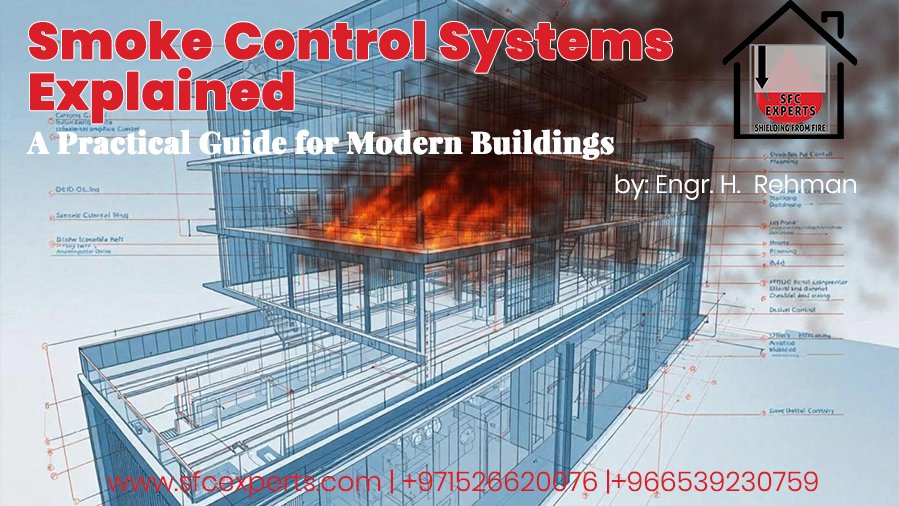
Smoke Control Systems Explained: A Practical Guide for Modern Buildings
Smoke Control Systems are a fundamental part of modern fire and life-safety design. Their primary function is to manage the movement of smoke during a fire event, maintaining tenable conditions for occupants and supporting effective evacuation and firefighting operations. This article explains how smoke control systems work, their key components, and the critical role smoke curtains play in improving system performance and regulatory compliance in complex building environments.
Introduction
In most fire incidents, smoke causes more injuries and fatalities than flames. Modern buildings with open layouts, atriums, interconnected floors, and extended travel distances significantly increase the risk of rapid smoke spread. Smoke Control Systems are engineered solutions designed to limit smoke movement, protect escape routes, and improve visibility during evacuation. When properly designed and coordinated, these systems significantly enhance life safety without restricting architectural design intent.
What Is a Smoke Control System?
A Smoke Control System is an engineered fire safety system that manages smoke movement within a building during a fire emergency. Unlike fire suppression systems, smoke control does not extinguish the fire. Instead, it focuses on maintaining tenable conditions for occupants, limiting smoke migration to unaffected areas, preserving clear escape routes, and supporting firefighter access and operations. Smoke control strategies are typically based on containment, extraction, pressurization, or a combination of these methods.
Why Smoke Control Is Critical for Life Safety
Smoke spreads rapidly and can quickly fill corridors, staircases, and open spaces. Without effective smoke control, visibility drops, evacuation is delayed, toxic gases increase inhalation risks, and panic and disorientation can occur. An effective smoke control system slows smoke spread and provides occupants with the critical time needed to evacuate safely while improving conditions for emergency response teams.
Key Components of a Smoke Control System
Smoke control systems are activated automatically through the fire alarm system using smoke detectors, beam detectors, or other approved detection methods. Once activated, predefined responses are initiated across multiple systems. Mechanical smoke extraction systems remove smoke from designated areas using exhaust fans and ductwork and are commonly applied in atriums, shopping malls, basements, underground car parks, and large assembly spaces. Pressurization systems maintain higher air pressure in protected areas such as staircases, lift lobbies, and refuge spaces to prevent smoke ingress and ensure safe evacuation routes.
Smoke curtains act as essential containment elements within many smoke control strategies. They deploy automatically to limit lateral smoke spread, form smoke reservoirs, channel smoke toward extraction points, reduce the volume of smoke requiring extraction, and improve overall system efficiency.
Role of Smoke Curtains in Smoke Control Systems
Smoke curtains operate as part of a coordinated fire strategy rather than as standalone products. When deployed, they create defined smoke zones that enhance extraction performance and reduce fan capacity requirements. By controlling smoke layers and preventing uncontrolled migration, smoke curtains allow smoke control systems to function more effectively while preserving open architectural designs.
Common Smoke Control Strategies
Mechanical smoke control systems use powered fans and ductwork and are widely applied in high-rise and complex buildings. Natural smoke control relies on buoyancy and natural openings and is typically used in low-rise or industrial buildings. Zoned smoke control divides buildings into defined zones using smoke curtains or barriers to contain smoke within affected areas only.
Typical Applications
Smoke control systems are commonly used in shopping malls and atriums, airports and transport hubs, high-rise residential and commercial buildings, hospitals and healthcare facilities, and underground car parks and basements.
Codes, Standards, and Compliance
Smoke control systems must comply with applicable international and local regulations, including NFPA guidelines, BS and EN standards, performance-based fire engineering reports, and local Civil Defense or Authority Having Jurisdiction requirements. Early coordination between fire consultants, authorities, and specialist contractors is essential to ensure approval and effective system operation.
Conclusion
Smoke Control Systems are a critical element of modern fire safety design. By managing smoke movement, these systems protect occupants, support evacuation, and improve emergency response effectiveness. The integration of smoke curtains within smoke control strategies enables safer buildings while maintaining architectural flexibility and regulatory compliance.
About: Author
Engr. H. Rehman
Smoke and Fire Curtains Experts
WhatsApp: +966 53 923 0759 | +971 52 662 0076
Website: www.sfcexperts.com If you are planning a new project or upgrading an existing facility, early integration of smoke control systems and smoke curtains can significantly improve safety, compliance, and project efficiency. Contact us today for technical consultation, system design support, and compliant installation solutions.