Smoke Curtains in Smoke Management Systems
A Practical Guide for Life-Safety Design
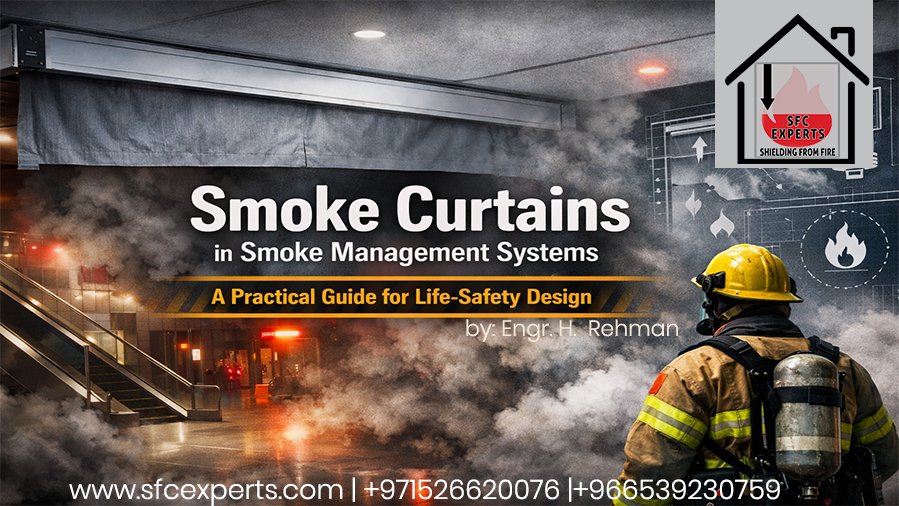
Smoke Curtains play a critical role in modern smoke management systems by controlling smoke movement, forming smoke reservoirs, and supporting efficient smoke extraction. This article explains how smoke curtains function within engineered smoke management strategies, why they are essential in complex and open-plan buildings, and how they contribute to life safety and regulatory compliance.
Introduction
In a fire, smoke spreads rapidly and unpredictably, especially in buildings with atriums, open floors, and interconnected spaces. Even the most powerful smoke extraction fans can become ineffective if smoke is allowed to spread freely.
Smoke Curtains are engineered containment elements designed to control smoke flow, limit lateral spread, and guide smoke toward extraction points. When correctly integrated into a smoke management system, they significantly improve system performance and occupant safety.
What Are Smoke Curtains?
Smoke Curtains are automatically deployed barriers made from smoke-limiting fabrics. Unlike fire curtains, they are not primarily intended to resist fire exposure for extended periods. Their primary function is to control smoke movement during the early and critical stages of a fire.
Smoke curtains are typically concealed within ceilings or architectural features and deploy automatically upon fire detection to form smoke reservoirs or containment zones.
Role of Smoke Curtains in Smoke Management Systems
Smoke management systems rely on predictable smoke behavior. Smoke curtains make this possible by physically defining smoke zones and preventing uncontrolled spread.
Within a smoke management system, smoke curtains:
- Contain smoke within designated reservoirs
- Prevent smoke migration into escape routes and adjacent spaces
- Improve the effectiveness of smoke extraction fans
- Reduce the volume of smoke that must be extracted
By controlling smoke flow, smoke curtains allow systems to be designed more efficiently and reliably.
How Smoke Curtains Work During a Fire Event
When a fire alarm or detection system is activated, smoke curtains deploy automatically to a predetermined height. Once deployed, they create a boundary that traps smoke in the upper layer of a space while allowing occupants to evacuate below the smoke layer.
As smoke accumulates within the defined reservoir, extraction fans remove it in a controlled manner. This coordinated operation maintains tenable conditions, improves visibility, and supports safe evacuation.
Smoke Curtains vs Smoke Barriers
Smoke curtains are often confused with fixed smoke barriers. While both limit smoke movement, their applications differ.
Smoke curtains are deployable systems designed to operate only during a fire event, making them ideal for open and flexible architectural spaces. Smoke barriers are typically fixed elements that permanently divide spaces.
In modern buildings, smoke curtains are often preferred where flexibility, aesthetics, and operational efficiency are required.
Common Applications of Smoke Curtains
Smoke curtains are widely used in:
- Atriums and large open voids
- Shopping malls and retail centers
- Airports and transportation terminals
- High-rise buildings with interconnected floors
- Escape routes adjacent to large open spaces
They are frequently combined with mechanical smoke extraction and pressurization systems as part of a comprehensive smoke management strategy.
Integration with Fire Alarm and Control Systems
Smoke curtains are integrated with:
- Fire alarm and detection systems
- Smoke control panels
- Emergency power supplies
- Building Management Systems where required
This integration ensures automatic deployment, system monitoring, and coordinated operation with fans and dampers during a fire event.
Codes, Standards, and Design Considerations
The design and installation of smoke curtains must align with:
- Approved smoke management strategies
- Fire engineering calculations
- BS, EN, NFPA, and local authority requirements
- Civil Defense or Authority Having Jurisdiction approvals
Early coordination between fire consultants, architects, and specialist contractors is essential to ensure system acceptance and performance.
Importance of Proper Design and Coordination
Incorrect placement or sizing of smoke curtains can compromise the entire smoke management system. Poor coordination often results in ineffective smoke reservoirs, increased fan loads, or approval delays.
Early design integration ensures that smoke curtains support both life safety objectives and architectural intent.
Conclusion
Smoke Curtains are a vital component of effective smoke management systems. By controlling smoke movement and supporting extraction strategies, they help maintain tenable conditions, protect escape routes, and improve overall fire safety performance.
When properly designed and integrated, smoke curtains enable safer buildings without sacrificing openness or design flexibility.
Author
Eng. H. Rehman
Smoke and Fire Curtains Experts (SFC Experts)
WhatsApp: +966 53 923 0759 | +971 52 662 0076
Website: www.sfcexperts.com
If you are designing or upgrading a building with open spaces or complex layouts, early integration of smoke curtains within the smoke management system can significantly improve safety and compliance. Contact us for technical consultation, system design support, and compliant installation solutions.