Maintenance, Inspection, and Continued Authority Compliance of Smoke and Fire Curtains
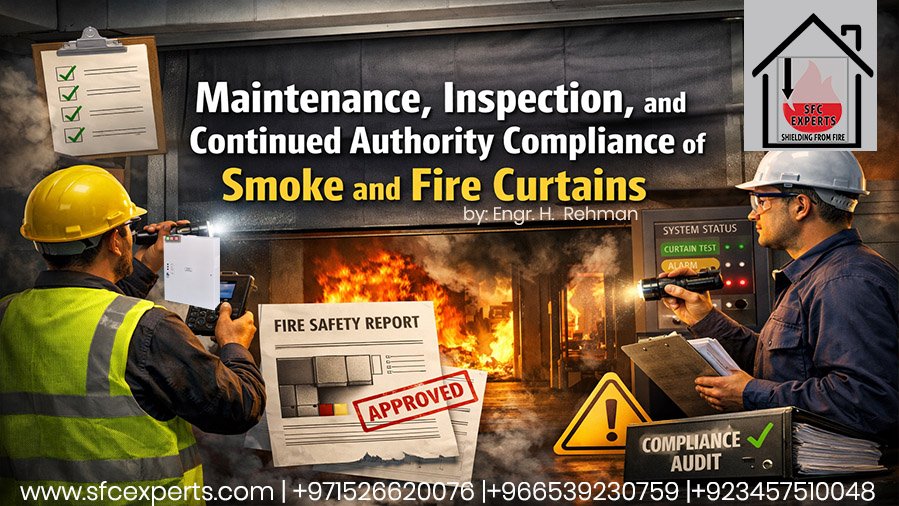
Smoke and fire curtain systems do not end at installation or authority approval. Like all active life-safety systems, they require periodic inspection, testing, and maintenance to ensure reliable operation throughout the building’s lifecycle.
Failure to maintain smoke and fire curtains can result in system malfunction, regulatory non-compliance, and increased risk during an emergency. This article explains why ongoing maintenance is critical and how continued authority compliance is sustained after project handover.
Introduction
Smoke and fire curtains are mechanical and electrical systems that remain dormant for long periods but must function instantly during a fire event. Over time, mechanical wear, environmental conditions, and unauthorized site modifications can affect system performance.
Continued authority compliance requires structured inspection and maintenance programs aligned with local regulations and manufacturer recommendations.
Why Maintenance Is Critical for Life Safety
Unlike passive fire-rated walls, smoke and fire curtains rely on motors, control panels, sensors, and power supplies. Any fault within these components can prevent proper deployment during a fire.
Regular maintenance ensures:
• Reliable deployment and retraction
• Proper alignment within side guides
• Functional integration with fire alarm systems
• Compliance with approved cause-and-effect logic
• Operational readiness during emergencies
Neglected systems may pass visual inspection but fail under actual fire conditions.
Inspection Requirements and Recommended Frequency
Inspection frequency typically depends on local regulations, authority requirements, and manufacturer guidance. In many Middle Eastern jurisdictions, periodic testing is required as part of building fire safety certification.
Routine inspections should include:
• Visual examination of curtain fabric and side guides
• Testing of automatic deployment
• Verification of control panel indicators
• Confirmation of signal reception from fire alarm systems
• Checking backup power functionality
All inspections must be documented for regulatory record keeping.
Impact of Unauthorized Modifications
Building modifications after handover often affect curtain performance. Ceiling renovations, additional lighting fixtures, HVAC alterations, or signage installations can obstruct curtain deployment or reduce effective drop height.
Any architectural or services changes near curtain locations should be reviewed to ensure continued compliance with the approved fire strategy.
Documentation and Compliance Records
Maintaining detailed service records is essential for continued authority compliance. Authorities may request maintenance logs during periodic inspections, renewals, or post-incident investigations.
Proper documentation should include:
• Maintenance schedules
• Test reports
• Fault rectification records
• System modification approvals
• Updated as-built drawings where applicable
Clear documentation demonstrates responsible system management and supports regulatory confidence.
Role of Facility Management Teams
Facility management teams play a critical role in ensuring long-term reliability of smoke and fire curtains. Coordination between FM teams and specialist contractors ensures that maintenance is conducted professionally and in accordance with approved standards.
Training building operators to recognize system faults or warning indicators further reduces the risk of unnoticed failures.
Consequences of Non-Compliance
Failure to maintain smoke and fire curtain systems may result in:
• Authority non-compliance notices
• Delays in fire safety certificate renewals
• Insurance complications
• Increased liability during fire incidents
Continued compliance protects not only building occupants but also asset value and legal standing.
Conclusion
Maintenance and inspection are essential to ensuring that smoke and fire curtains remain compliant and operational long after initial authority approval. A structured maintenance strategy safeguards life safety performance and regulatory standing.
Ongoing compliance is not optional; it is a continuous responsibility that ensures these systems perform when they are needed most.
About Author
Eng. H. Rehman
Smoke and Fire Curtains Experts (SFC Experts)
WhatsApp: +966 53 923 0759 | +971 52 662 0076
Website: www.sfcexperts.com
Regular inspection and professional maintenance are key to continued authority compliance. Contact us for scheduled testing, maintenance contracts, and compliance support for smoke and fire curtain systems.